Most e-commerce stores leave money on the table before a single customer arrives — slow load times, clunky checkout, poor SEO. A well-built store is an asset that compounds: every tenth of a second you shave off load time, every friction point you remove from checkout, every product page you optimise for search. This guide covers the decisions that move the needle.
Headless custom vs Shopify — which to choose
Shopify is the right choice when you need to launch fast with a proven checkout, don't need deep custom logic, and want an ecosystem of apps. A custom headless store (Next.js + your own backend) is right when you need a unique UX, complex product logic, non-standard payments, or a marketplace model.
Speed is conversion
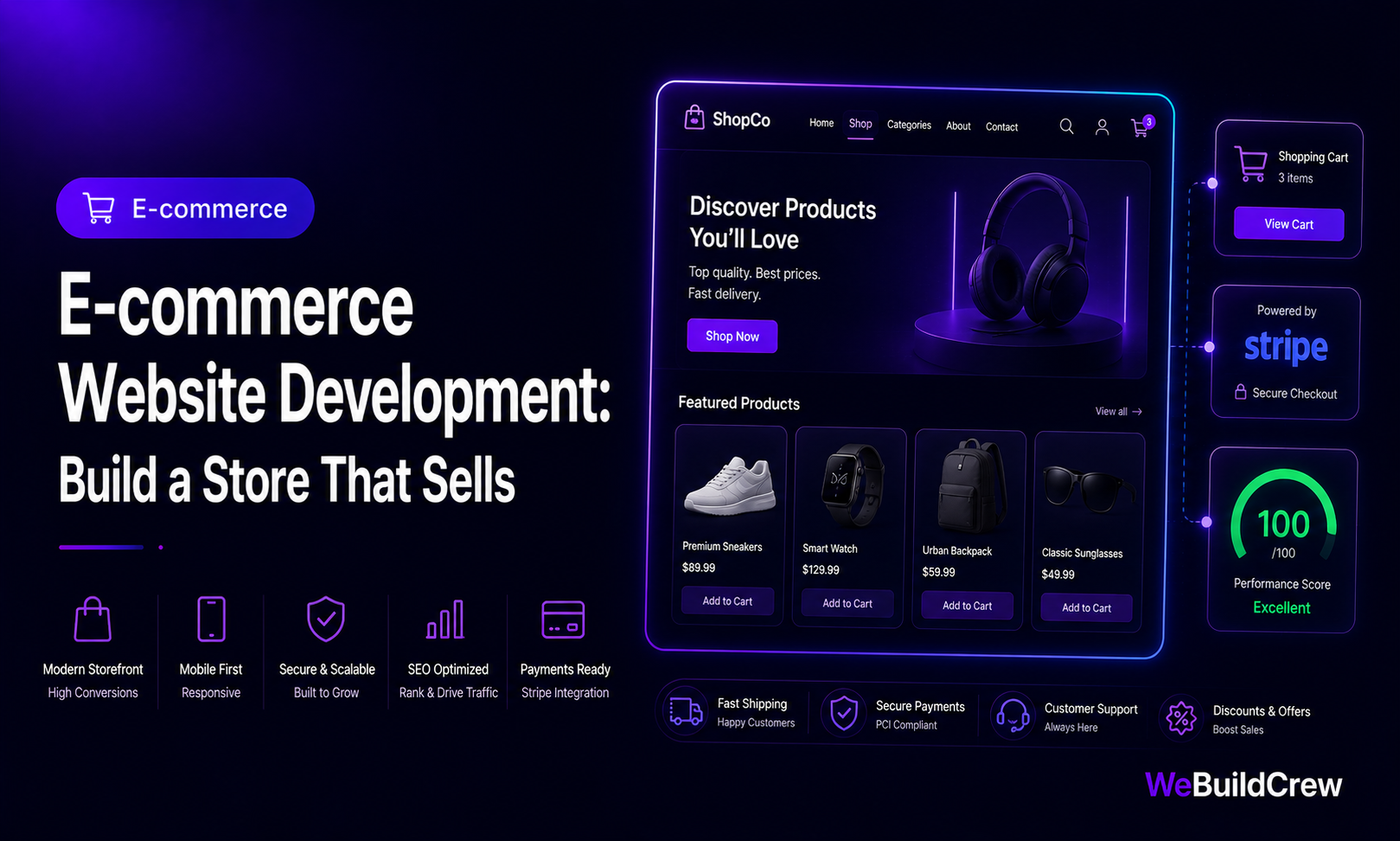
Every 100ms of latency costs conversion. The target: sub-1-second LCP, 90+ Lighthouse, and images that don't shift layout. We achieve this with server-rendered product pages, Cloudinary image transforms, and Next.js ISR so even large catalogs load instantly.
0.9s
Target LCP
+38%
Conversion at 0.9s vs 3s
100
Lighthouse SEO
ISR
Static at edge
Checkout — reduce friction, increase completion
Checkout abandonment averages 70%. The biggest killers: forced account creation, too many form fields, no trusted payment logos, and surprise shipping costs. We use Stripe's hosted checkout (handles 3DS, wallets, local methods) and surface shipping costs on the cart page.
const session = await stripe.checkout.sessions.create({ mode: "payment", line_items: cartItems.map((item) => ({ price_data: { currency: "usd", product_data: { name: item.name, images: [item.image] }, unit_amount: item.priceInCents, }, quantity: item.qty, })), shipping_address_collection: { allowed_countries: ["US", "GB", "PK"] }, success_url: `${BASE}/orders/success?session_id={CHECKOUT_SESSION_ID}`, cancel_url: `${BASE}/cart`,});Product page SEO that drives organic traffic
Product pages are your organic entry points. Each needs a unique title tag, descriptive H1, variant-aware canonical URL, and Product structured data (schema.org) so Google can show price, availability and ratings in search results.
Adding crypto payments
For global stores with customers in regions where cards are hard, crypto checkout (BTC, ETH, USDT, SOL) opens a new payment rail. We integrate a payment processor that handles conversion risk and settles in your preferred currency — your order flow stays the same.
Need this built? Explore our E-commerce Solutions service.
View service →Written by Zahid Ghotia · Published 7 June 2026 · 10 min read