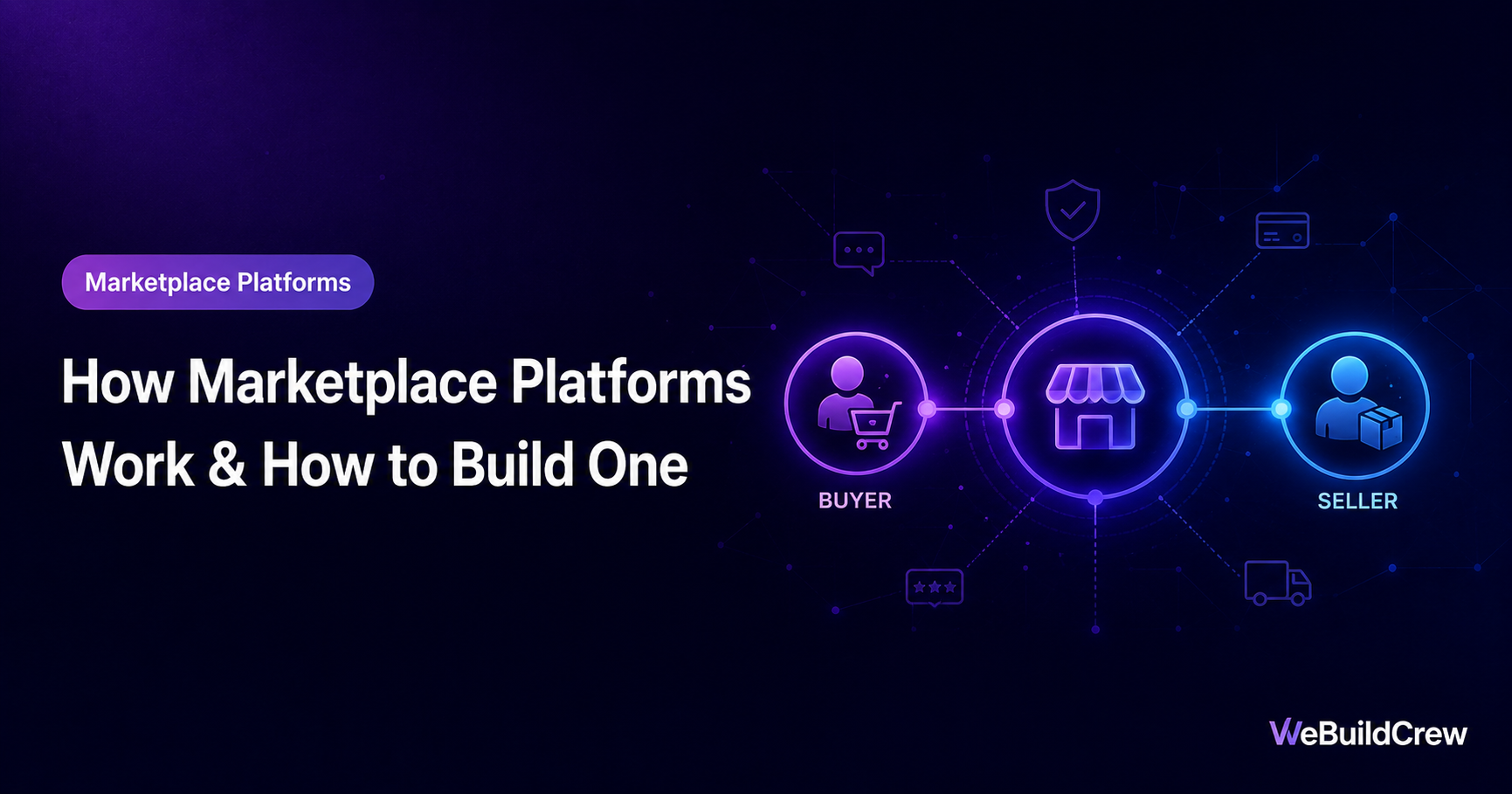
A marketplace is two products in a trench coat: one for the people who supply (sellers, providers, hosts) and one for the people who buy. Get the balance, the payments and the trust right and it compounds; get them wrong and you have a ghost town. This is how marketplaces actually work under the hood, and the architecture we use to build them.
1. The two-sided problem
Every marketplace has to solve a chicken-and-egg problem: buyers won't come without supply, and suppliers won't list without buyers. The product's job is to make each side instantly useful to the other.
2. Anatomy of a marketplace
- ✓Supply side: onboarding, listings, availability, payouts
- ✓Demand side: search, filters, booking/checkout, messaging
- ✓Matching: ranking, recommendations, availability logic
- ✓Trust & safety: KYC/verification, reviews, dispute handling
- ✓Money: payments, escrow, commission, vendor payouts
- ✓Admin: moderation, analytics, fee configuration
3. Payments are the hard part
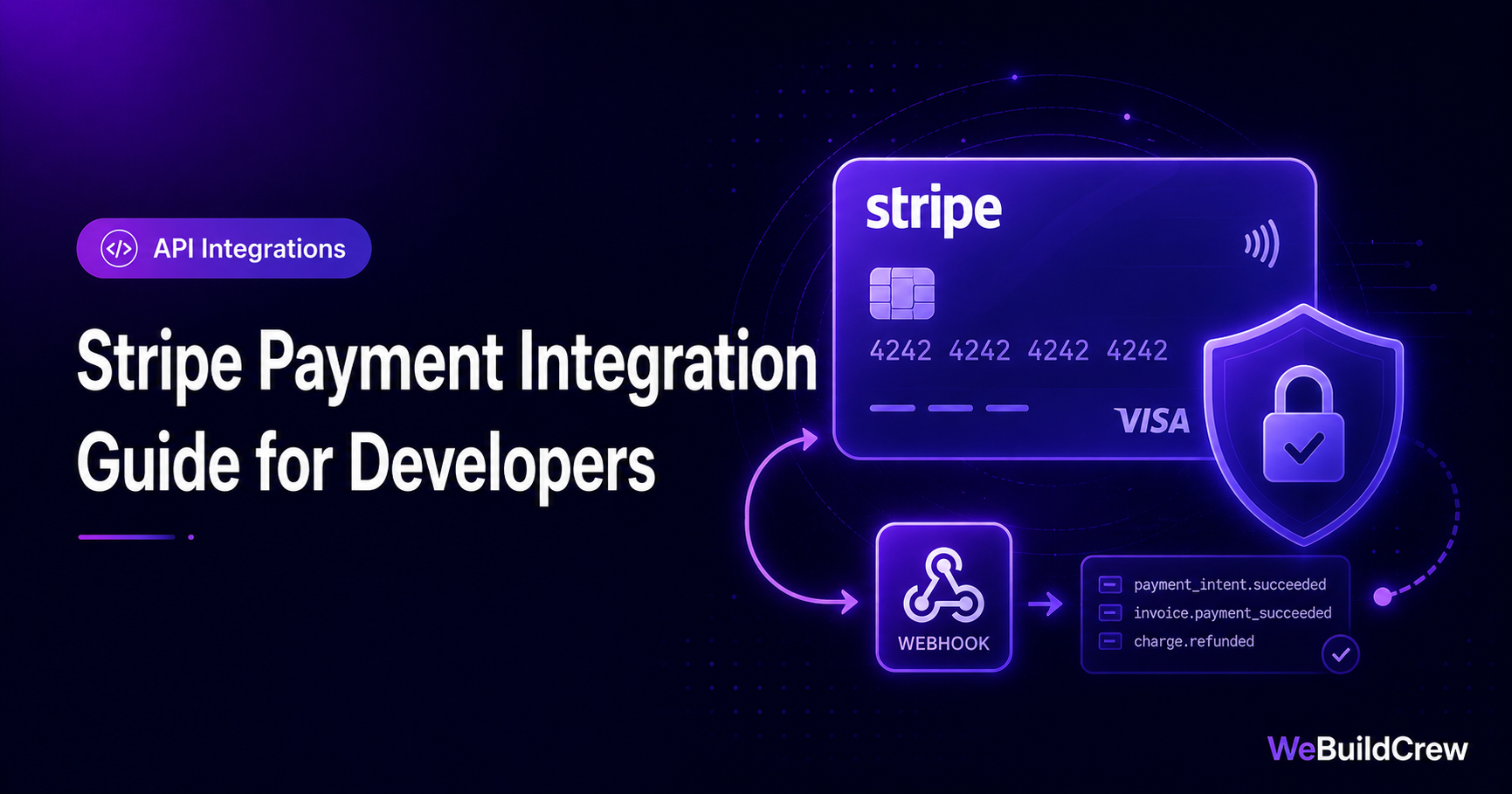
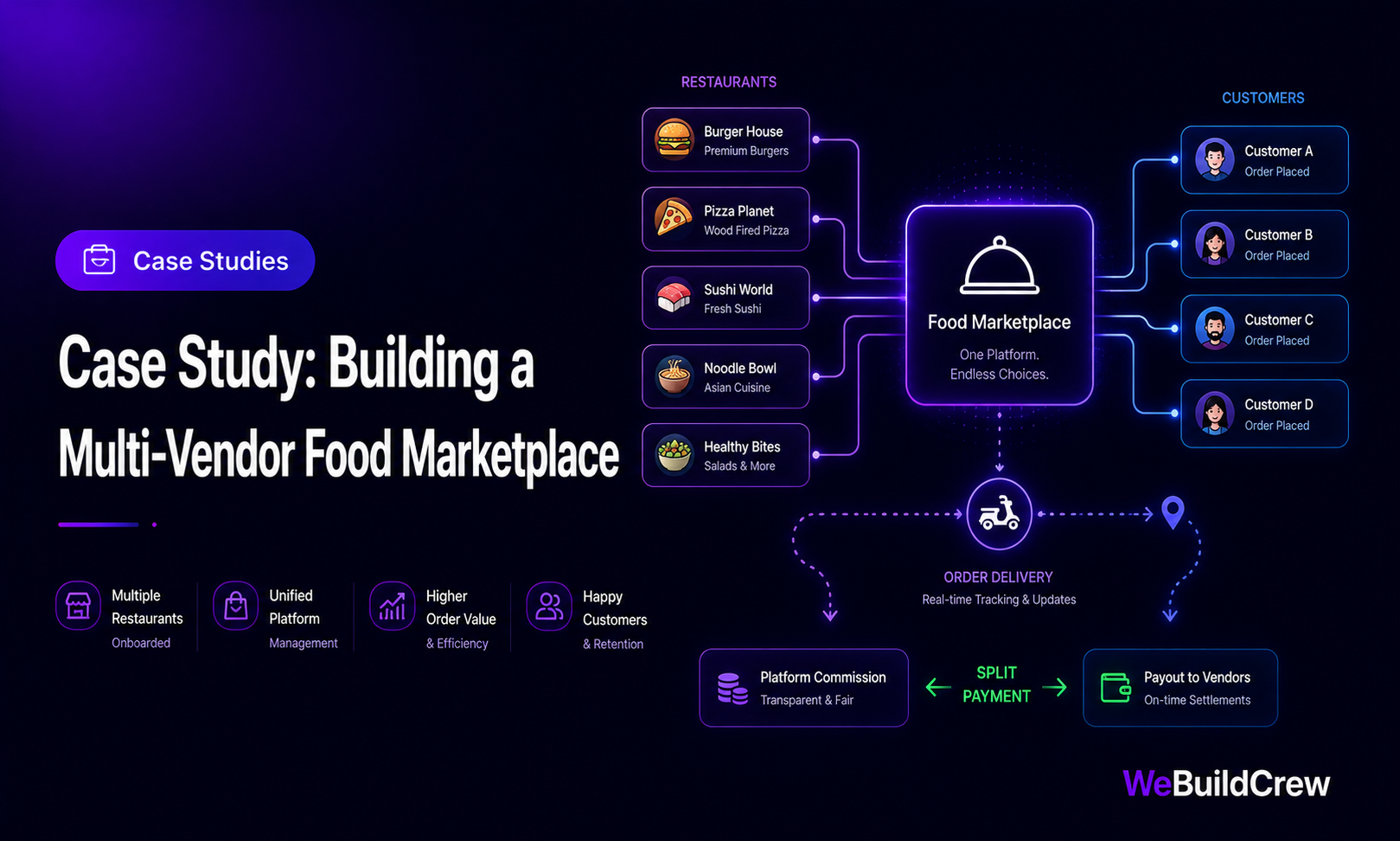
In a normal store, money flows buyer → you. In a marketplace it flows buyer → platform → many vendors, minus a commission, often held in escrow until delivery. We use Stripe Connect (or an escrow provider) to move money safely and stay compliant.
const session = await stripe.checkout.sessions.create({ mode: "payment", line_items: [{ price_data: buildPrice(listing), quantity: 1 }], payment_intent_data: { application_fee_amount: commission(listing.price), // platform cut transfer_data: { destination: vendor.stripeAccountId }, // vendor payout }, success_url: BASE + "/orders/success", cancel_url: BASE + "/listings/" + listing.id,});4. Single-vendor vs multi-vendor
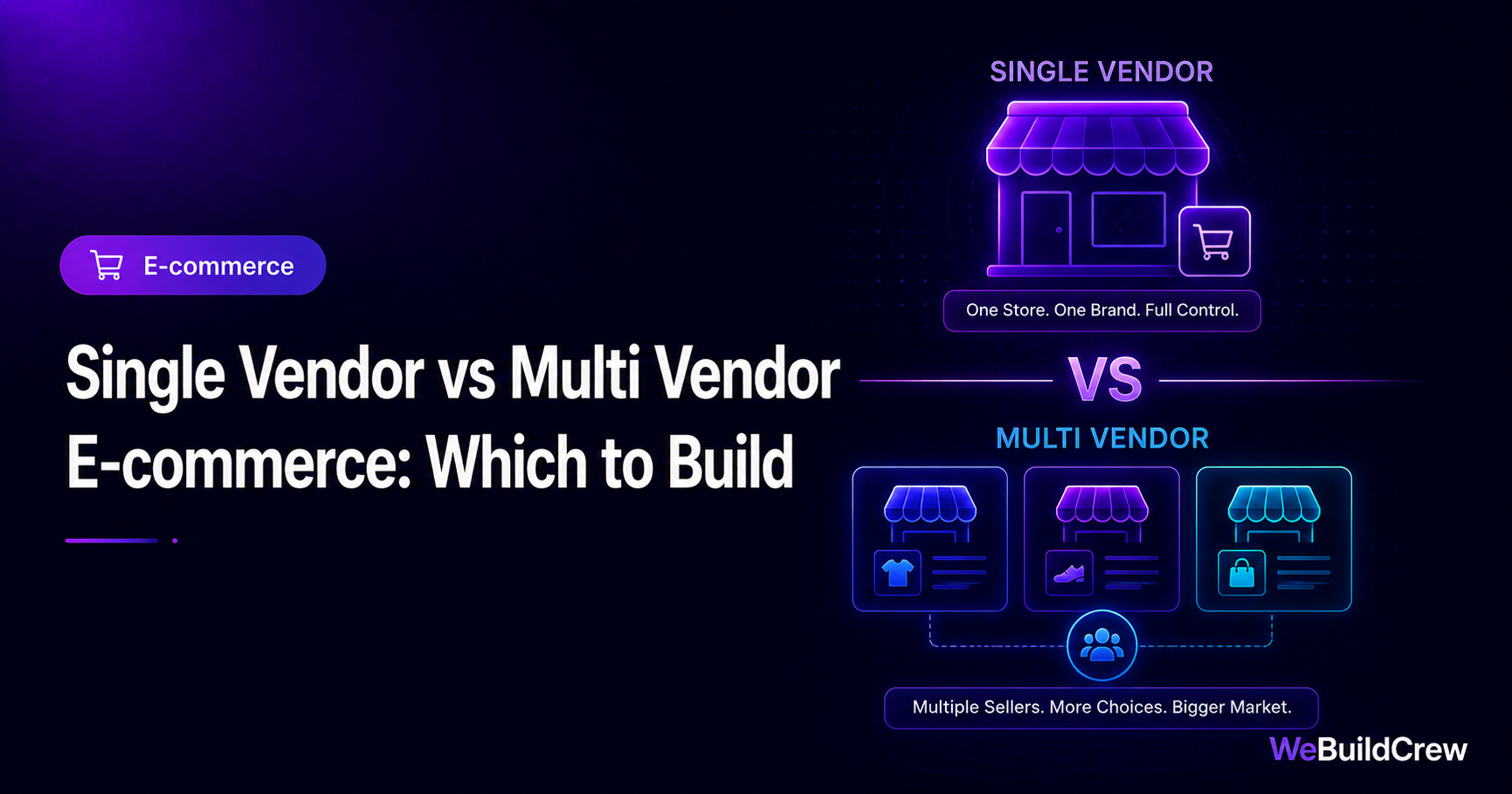
If you sell your own inventory, you want a single-vendor store — simpler, faster, fully under your control. A marketplace makes sense only when the value is in connecting many independent sellers or providers.
- Single-vendor
- Your products, your margins, simplest build
- Multi-vendor
- Many sellers, commission model, more complex
- Decision driver
- Do you own the inventory or the network?
5. The stack we build on
Next.js
SEO-friendly listings
PostgreSQL
Relational core
Stripe Connect
Split payouts
Meilisearch
Fast search/filters
export async function GET(req: Request) { const { searchParams } = new URL(req.url); const results = await search.index("listings").search( searchParams.get("q") ?? "", { filter: buildFilters(searchParams), // category, price, location sort: ["rating:desc", "createdAt:desc"], limit: 24, } ); return Response.json(results.hits);}6. How we build it
- 1
Model the two sides
Vendors, listings, orders, payouts and commissions — the data first.
- 2
Discovery experience
Search, filters and listing pages that rank and convert.
- 3
Safe checkout & payouts
Escrow/split payments via Stripe Connect with clear receipts.
- 4
Trust layer
Verification, reviews and a dispute/moderation flow.
- 5
Admin & analytics
Fee config, moderation tools and revenue dashboards.
Business & technical payoff
- Estimated timeline
- 8–16 weeks for a real MVP
- Best for
- Networks of sellers, services, rentals
- Related service
- Marketplace Platforms
Need this built? Explore our Marketplace Platforms service.
View service →Written by WeBuildCrew Team · Published 15 May 2026 · 11 min read