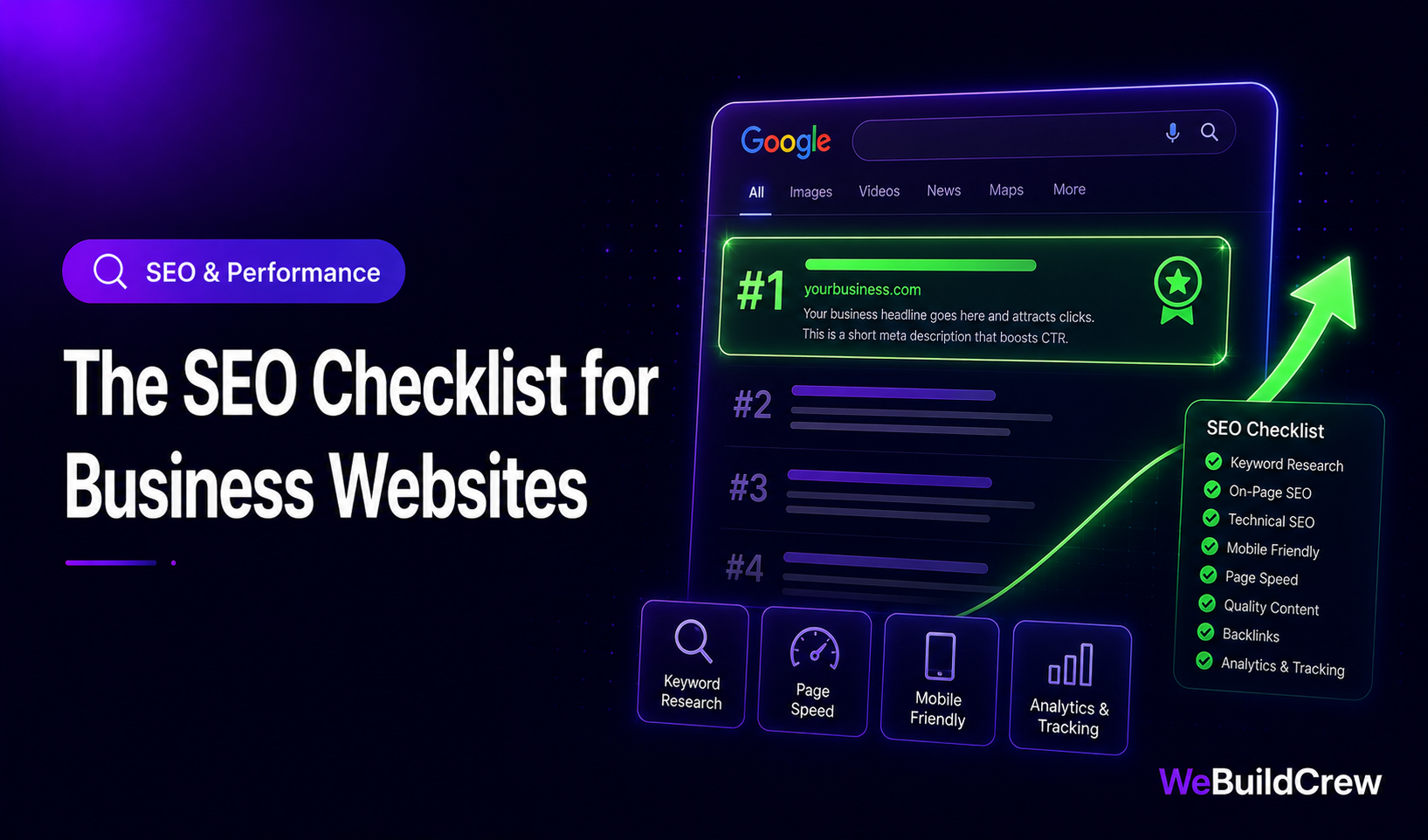
If a website's job includes ranking on Google, the framework you choose matters more than people think. Next.js keeps coming out on top for SEO — not because it's trendy, but because it solves the things search engines actually care about by default.
1. Crawlers get real HTML
Single-page apps that render only in the browser can hide content from crawlers. Next.js renders HTML on the server (or at build time), so search engines see your full content immediately.
2. Per-page metadata is first-class
Every page can define its own title, description, canonical and Open Graph data with a simple export — no plugins, no hacks.
export async function generateMetadata({ params }) { const post = await getPost(params.slug); return { title: post.seoTitle, description: post.excerpt, alternates: { canonical: "/blog/" + post.slug }, openGraph: { title: post.title, type: "article" }, };}3. Speed is built in
- ✓Automatic code-splitting and lazy loading
- ✓Image optimisation out of the box
- ✓Edge/CDN delivery for global speed
- ✓Great Core Web Vitals by default
import Image from "next/image"; export function Hero() { return ( <Image src="/hero.jpg" alt="Product hero" width={1200} height={630} priority /> );}4. Sitemaps, robots & structured data
Next.js generates sitemaps and robots files programmatically, and makes adding JSON-LD structured data trivial — the full SEO toolkit in one framework.
- Rendering
- SSR / SSG / ISR
- Best for
- Content & marketing sites, SaaS
- Related service
- Web Development
Need this built? Explore our SEO & Performance service.
View service →Written by WeBuildCrew Team · Published 20 November 2025 · 7 min read